Oct 07, 2026
0 comments
Summary: Holistic healing takes a whole-person approach. It considers the connection between the mind, body, emotions, nervous system and overall wellbeing. Depending on the practitioner and the person’s needs, it may combine counselling with Reiki, meditation, breathwork, somatic therapy, sound healing and other complementary practices.
The purpose of holistic healing is to support greater self-awareness, emotional wellbeing, nervous-system regulation and meaningful, lasting change.
Have you ever talked about the same issue again and again, understood exactly where it comes from, yet still found yourself reacting in the same way?
You may understand your triggers. You may know why certain patterns developed. You may have talked about your past and gained valuable insight.
But your body may still react.
Your mind may still overthink.
Certain emotions or relationship patterns may continue to resurface.
This is where holistic healing can offer a broader perspective.
Traditional therapy can be incredibly valuable and may help people explore thoughts, emotions, behaviours, relationships, past experiences and coping patterns.
Holistic healing takes a whole-person approach. Rather than focusing on one area alone, it considers how the mind, body, emotions, nervous system, lifestyle and overall wellbeing may all be influencing one another.
What Are the Key Differences Between Holistic Healing Sessions and Traditional Therapy?
Understanding the Story Is Only One Part of Healing
Many forms of therapy involve exploring your experiences, thoughts, behaviours, emotions and relationships.
This insight can be incredibly valuable.
However, understanding why something is happening does not always mean the pattern immediately changes.
For example, you may understand that a past experience contributed to your anxiety, yet still find yourself feeling tense, hyperalert or unable to switch off.
You may understand why you struggle with boundaries but still automatically say yes when you want to say no.
Or you may recognise where a relationship pattern began but continue finding yourself repeating it.
A holistic approach considers not only what happened and what you think about it, but also how those experiences may still be influencing your emotions, body, nervous system, behaviour and overall wellbeing.
Your Body Becomes Part of the Conversation
Let’s face it! Sometimes, healing is not only about talking. If you experience stress and difficulties, they can affect your sleep, breathing, reactions, and feelings.
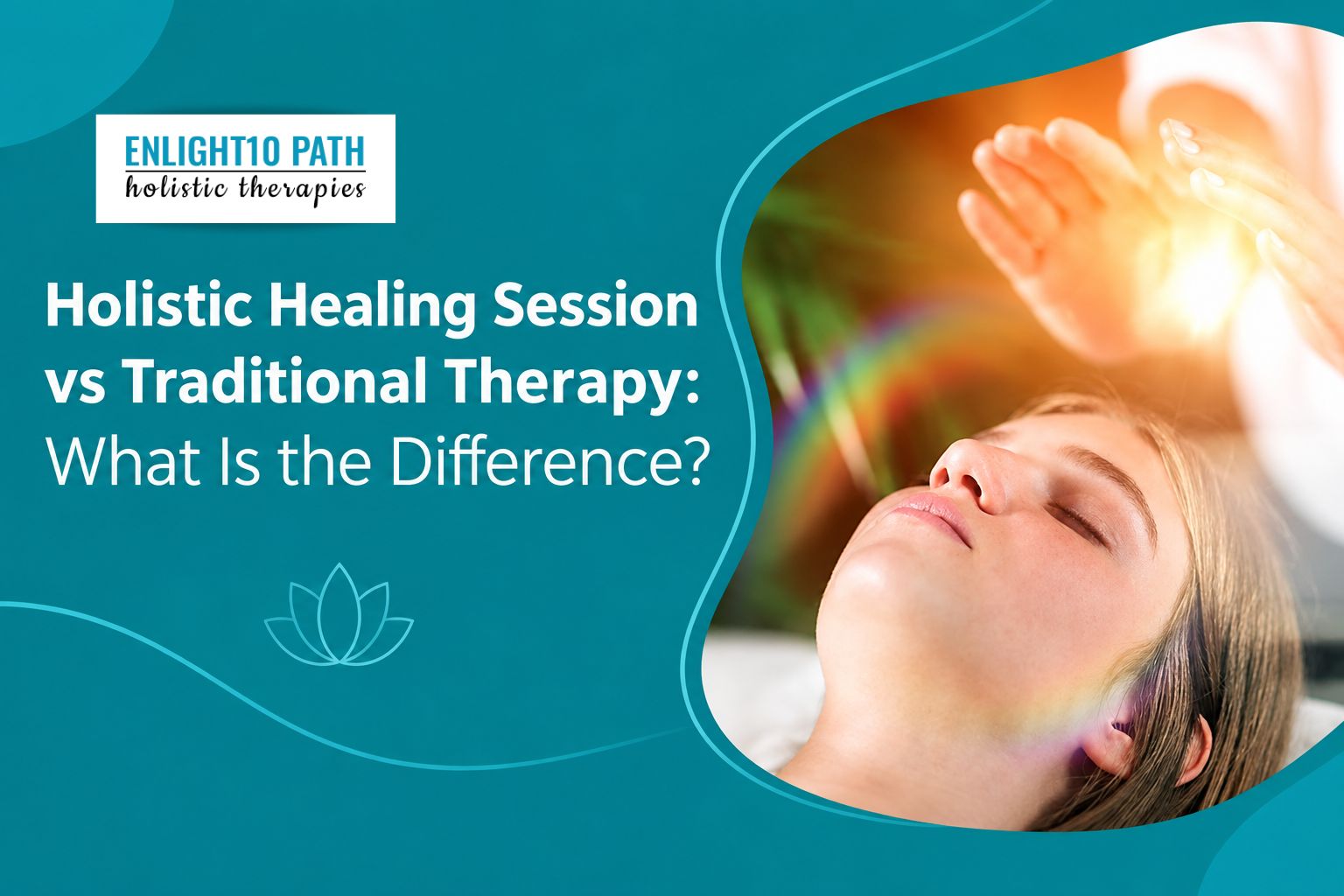
That is why holistic healing may incorporate various approaches such as Reiki, somatic therapy, sound healing, meditation, breathwork and energy-based practices alongside counselling. For example, Reiki encourages relaxation and emotional balance. You will get a completely different experience from sitting and talking about issues.
One Approach Does Not Have to Fit Everyone
Holistic healing does not follow one fixed formula.
Different people may need support in different areas, which is why a whole-person approach can draw on a range of modalities.
A personalised holistic session may include psychotherapy, somatic therapy, Reiki, Seichim, Pellowah, sound healing, crystal and colour therapy, holistic counselling and health coaching.
Rather than working with one part of the person in isolation, these approaches can be combined to support the mind, body, emotions, nervous system and overall wellbeing.
This allows the work to be personalised to the individual while still remaining grounded in a whole-self approach.
Trauma Is Viewed Through the Whole Person
Trauma and difficult life experiences can affect much more than your thoughts.
They can influence your relationships, confidence, emotional reactions, sleep, energy, behaviour and the way you respond to everyday situations.
Some people may experience hypervigilance, overthinking, difficulty relaxing, people-pleasing, emotional overwhelm, disconnection from themselves or the feeling that they always need to be “on”.
Others may understand their past very clearly but still notice that their body responds as though something is wrong or unsafe.
A holistic trauma-informed approach looks at the bigger picture.
Rather than only revisiting difficult experiences, support may include counselling, trauma-focused approaches, nervous-system regulation, somatic practices, energy healing and lifestyle-focused coaching.
The aim is not simply to understand what happened, but to explore how past experiences may still be influencing the way you think, feel, respond and live today.
The Nervous System Becomes Part of the Healing Process
The nervous system plays an important role in how we respond to stress, uncertainty and perceived threat.
When someone has experienced prolonged stress, difficult relationships, trauma or periods of emotional overwhelm, they may find it difficult to fully relax even when life appears calm.
This can sometimes show up as racing thoughts, tension, irritability, poor sleep, emotional reactivity, difficulty slowing down or feeling constantly alert.
Holistic healing recognises that these responses are not only happening at the level of thought.
That is why nervous-system support, grounding, breathwork, somatic practices, meditation and other body-based approaches may form part of the healing process.
The focus becomes not only understanding the pattern, but also supporting the body and nervous system as part of deeper change.
Insight and Change Are Not Always the Same Thing
Understanding yourself can be deeply empowering.
You may know where your low self-esteem began.
You may understand why you overthink.
You may recognise why certain relationships trigger you.
You may even know exactly where a particular coping pattern came from.
But knowing why something happens does not always automatically change the response.
Sometimes deeper change involves working with the pattern itself across the mind, body, emotions and nervous system.
That is why holistic healing looks beyond information and insight alone.
Rather than only asking:
“What am I thinking?”
It can also explore:
“What am I feeling?”
“What is happening in my body?”
“What patterns have become automatic?”
“What am I still carrying?”
“What needs to be released, regulated or supported?”
This whole-self perspective can help uncover patterns that may still be operating beneath conscious awareness.
Holistic Healing Looks at the Whole Person
Holistic healing recognises that we are more than just our thoughts.
Our emotional wellbeing can be influenced by our relationships, lifestyle, physical health, nervous system, stress levels, past experiences, beliefs, habits and the way we relate to ourselves.
These areas do not exist separately.
For example, prolonged stress may affect sleep.
Poor sleep may affect mood and emotional regulation.
Emotional strain may contribute to tension in the body.
And patterns formed through past experiences may influence how we react to current situations.
A whole-self approach considers these connections rather than looking at one symptom in isolation.
The Goal Can Extend Beyond Feeling Better Today
Holistic healing is not necessarily focused only on creating temporary relief.
It can also support deeper self-awareness and help uncover patterns that influence everyday life.
Over time, this may affect areas such as boundaries, relationships, habits, emotional responses, stress levels, lifestyle and the ability to feel more connected to yourself.
The focus is on supporting meaningful change across the whole person rather than addressing only one isolated symptom.
For some people, this may happen through individual sessions.
For others, deeper work may take place over time through counselling, trauma-informed therapy, energy healing or a structured whole-self healing program.
Final Thoughts
Holistic healing recognises that we are more than just our thoughts.
Our experiences can influence the way we think, feel, respond, relate to others and move through everyday life. They can also affect the body, nervous system, emotions, energy and overall sense of wellbeing.
That is why whole-self healing looks beyond understanding the problem intellectually.
It considers the person as a whole and works across the different layers that may be contributing to how they are feeling today.
At Enlight10 Path, holistic healing is personalised and may incorporate counselling, trauma-informed support, nervous-system work, somatic practices, meditation, Reiki and other complementary therapies.
The focus is not simply on understanding why you feel the way you do, but on supporting change across the mind, body, emotions and nervous system so you can feel more calm, connected and like yourself again.
If you feel as though you have understood your patterns but are still experiencing the same emotional reactions, overthinking, stress or disconnection, whole-self healing may help you begin working with what sits beneath the surface.
Contact Enlight10 Path to learn more about holistic healing sessions.
FAQs
Q: What is the difference between holistic healing and traditional therapy?
Traditional therapy can involve exploring thoughts, emotions, behaviours, relationships and past experiences using a range of therapeutic approaches.
Holistic healing takes a broader whole-person perspective. It considers the connection between the mind, body, emotions, nervous system and overall wellbeing, while also incorporating complementary approaches where appropriate.
Q: What can I expect during a holistic healing session?
A holistic healing session may include counselling alongside practices such as Reiki, meditation, somatic therapy, breathwork, sound healing, nervous-system support or other personalised approaches.
The session may be adapted depending on what you are experiencing and which areas of your wellbeing need the most support.
Q: Is holistic healing suitable for trauma and emotional difficulties?
A trauma-informed holistic approach can support people experiencing emotional difficulties or the ongoing effects of stressful or traumatic experiences.
It can explore emotional patterns alongside body awareness, nervous-system regulation, relationships, lifestyle and overall wellbeing, allowing healing to be approached from a whole-person perspective.